

Does a Car Lease Affect Mortgage Approval?
An underwriter explains why lease payments matter.
If you’re thinking about buying a home, there’s one financial decision that can quietly affect your mortgage approval before you ever fill out a loan application.
Surprisingly, it’s one that many borrowers never see coming.
Leasing a vehicle.
I’ve had more than one borrower say something like, “It’s only a lease. I don’t even own the car.”
From an underwriting standpoint, that doesn’t matter.
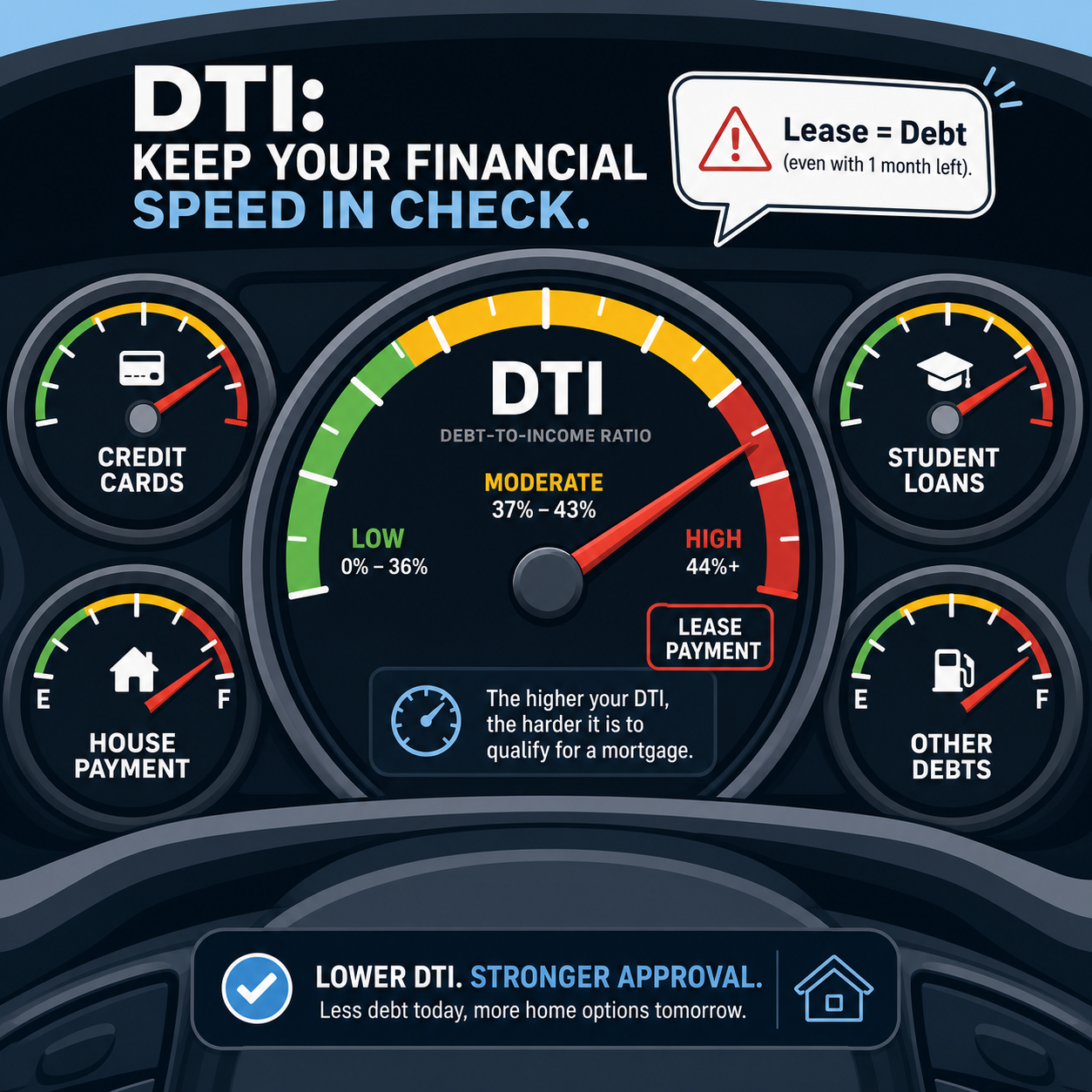
What matters is that you have a monthly payment you’re legally obligated to make, and that payment becomes part of your DTI (debt-to-income ratio).
Why Car Lease Payments Count Toward Your DTI
This is one of those areas where every major mortgage program agrees.
Whether you’re applying for a Conventional, FHA, VA, USDA, or Freddie Mac loan, your lease payment is generally treated as a recurring monthly debt.
This is because, in the overwhelming majority of cases, when your lease expires, you probably aren’t going to start walking to work.
You’ll likely lease another vehicle, buy the one you’re driving, or finance a different car. In other words, the payment usually doesn’t disappear. It simply changes form.
Mortgage Lending Explained is a reader-supported publication. To receive new posts and support my work, consider becoming a free or paid subscriber.
What If My Lease Ends Next Month?
This is probably the biggest misconception I hear.
Many borrowers assume that if they only have a month or two left on their lease, the payment won’t count. In almost every case, that’s not how mortgage underwriting works.
Unlike many installment loans that may be excluded when they have less than ten payments remaining, lease payments are generally included regardless of how close they are to ending.
The reasoning is simple. Just as stated above, the lender assumes you’ll still need reliable transportation after the lease expires.
If your lease is close to expiring during the mortgage process, your lender may ask additional questions. They may want to know whether you plan to return the vehicle, lease another one, or purchase the current vehicle. Any of these situations could change your monthly obligations and, ultimately, your mortgage qualification. You’ll likely need to document both the new payment and the source of the funds used for the purchase or the current lease buy-out.
How Different Mortgage Loan Programs Handle Car Leases
Fannie Mae (FNMA)
Fannie Mae requires lease payments to be included in your monthly debt obligations regardless of how many months remain on the lease.
The reasoning is straightforward. When one lease ends, most borrowers either lease another vehicle, purchase the vehicle they’re driving, or finance a replacement vehicle. Because the obligation is expected to continue in one form or another, the payment remains part of your qualifying ratios.
FHA/VA
FHA and VA follow essentially the same philosophy.
Lease payments must be included in your recurring monthly obligations regardless of the maturity date.
The reasoning is the same. FHA and VA recognize that a leased vehicle is generally a necessary expense, so the monthly obligation is included even if the lease is nearly complete.
USDA
USDA follows the same general rule.
Lease payments are always included in your monthly debt calculations, even if only one payment remains.
USDA also makes it clear that receiving an employer vehicle allowance doesn’t automatically eliminate the debt from your application. The lease payment must still be considered during the underwriting process.
Freddie Mac (FHLMC)
Freddie Mac also requires monthly lease payments to be included in your debt-to-income ratio regardless of the number of payments remaining.
There is one notable exception.
If an automobile lease is completely paid off before closing, the monthly payment may be excluded. However, the lender must document where the payoff funds came from, and those funds must come from an acceptable source.
Does an Employer Car Allowance Offset a Lease Payment?
This is another question I hear fairly often.
Some employers provide a monthly vehicle allowance or reimbursement.
Unfortunately, that doesn’t automatically offset your lease payment for mortgage qualification.
The lease itself is still a legal financial obligation, and the payment must be evaluated under the applicable loan guidelines. An employer-provided auto allowance may help you qualify, but every investor handles these allowances differently. In most cases, you’ll need to demonstrate that the allowance has been received consistently over time, and your lender will require documentation to verify both the history and the amount before it can be considered during the underwriting process.
What If My Business Makes the Lease Payments?
This is fairly common with auto leases. In some cases, the lease obligation may qualify as a contingent liability, allowing the monthly payment to be excluded from your DTI if specific documentation requirements are met. Generally, you’ll need to show that the lease payments have been made consistently by the business for the past 12 months, not from a personal account or an account used to pay your day-to-day living expenses (see my prior article about separating business and personal accounts). When properly documented, this can be an effective way to keep the lease payment from being included in your monthly debt obligations for qualifying purposes.
Before You Sign That Lease…
If buying a home is on your radar over the next year, talk with your loan officer before signing a new vehicle lease.
A monthly payment that seems manageable on its own can have a bigger impact on your mortgage qualification than many people expect.
That doesn’t mean leasing is a bad idea. It simply means you should understand how that decision fits into the bigger financial picture before you sign the paperwork.
Final Thoughts
One thing I learned during my years as an underwriter is that mortgage guidelines are designed to predict your ability to handle future payments, not just today’s bills.
That’s why lease payments receive special treatment.
The takeaway is simple. Just because a lease is almost over doesn’t mean it won’t affect your mortgage approval. Understanding how underwriters look at lease payments before you sign that next vehicle contract can save you from an unpleasant surprise when you’re ready to buy a home.
