

The Mortgage Payment Is Not the Cost of Owning a Home
The costs of homeownership that go far beyond your mortgage payment
When people talk about buying a home, the conversation almost always starts with the mortgage. What interest rate can you get? How much will your principal and interest payment be? How much money do you need for a down payment? How much house can you qualify for?
Those are important questions, but they aren’t the only ones a prospective home buyer needs to ask.
One of the most important questions is often overlooked: Can you afford to own the home after you buy it?
Qualifying for a mortgage is different from being financially comfortable with the responsibilities that come with owning a home. A lender looks at your income, debts, credit, assets, and other factors to determine whether you meet the requirements for a loan. That approval does not mean the resulting payment will necessarily feel comfortable in your everyday life.
And your principal and interest payment is only one part of the cost of owning a home.
What Does a Mortgage Payment Really Include?
When you are shopping for a home, it is easy to focus on the principal and interest payment. You find a house you like, plug the purchase price into a mortgage calculator, and start thinking about whether that monthly payment fits your budget.
But there is more to your housing payment than principal and interest.
You will have property taxes and homeowners insurance. If the property is part of a homeowners association, you’ll have HOA dues. Depending on where you live and the property you are buying, you may also need flood insurance or other coverage.
And these costs aren’t fixed forever. Property taxes change. Homeowners insurance premiums increase. HOA dues go up, and an HOA can sometimes levy a special assessment for a major expense.
I’ve covered most of these costs in prior articles because they are important to understanding a mortgage payment. What we haven’t talked about as much is everything that doesn’t show up on a mortgage calculator.
Because the mortgage company isn’t going to send someone over every few months to change your air filter, clean your gutters, or trim the tree that has started growing toward your roof. Don’t even get me started on termites and other pests that need to be dealt with.
That’s your job now.
Mortgage Lending Explained is a reader-supported publication. To receive new posts and support my work, consider becoming a free or paid subscriber.
The Hidden Costs of Homeownership
This is one of the biggest differences between renting and owning.
When something breaks in a rental, you generally call the landlord or property manager. When you own the house, you are the person responsible for figuring out what happened, who needs to fix it, and how you are going to pay for it.
The air conditioning stops working in the middle of summer? Your problem.
The water heater gives up? Your problem.
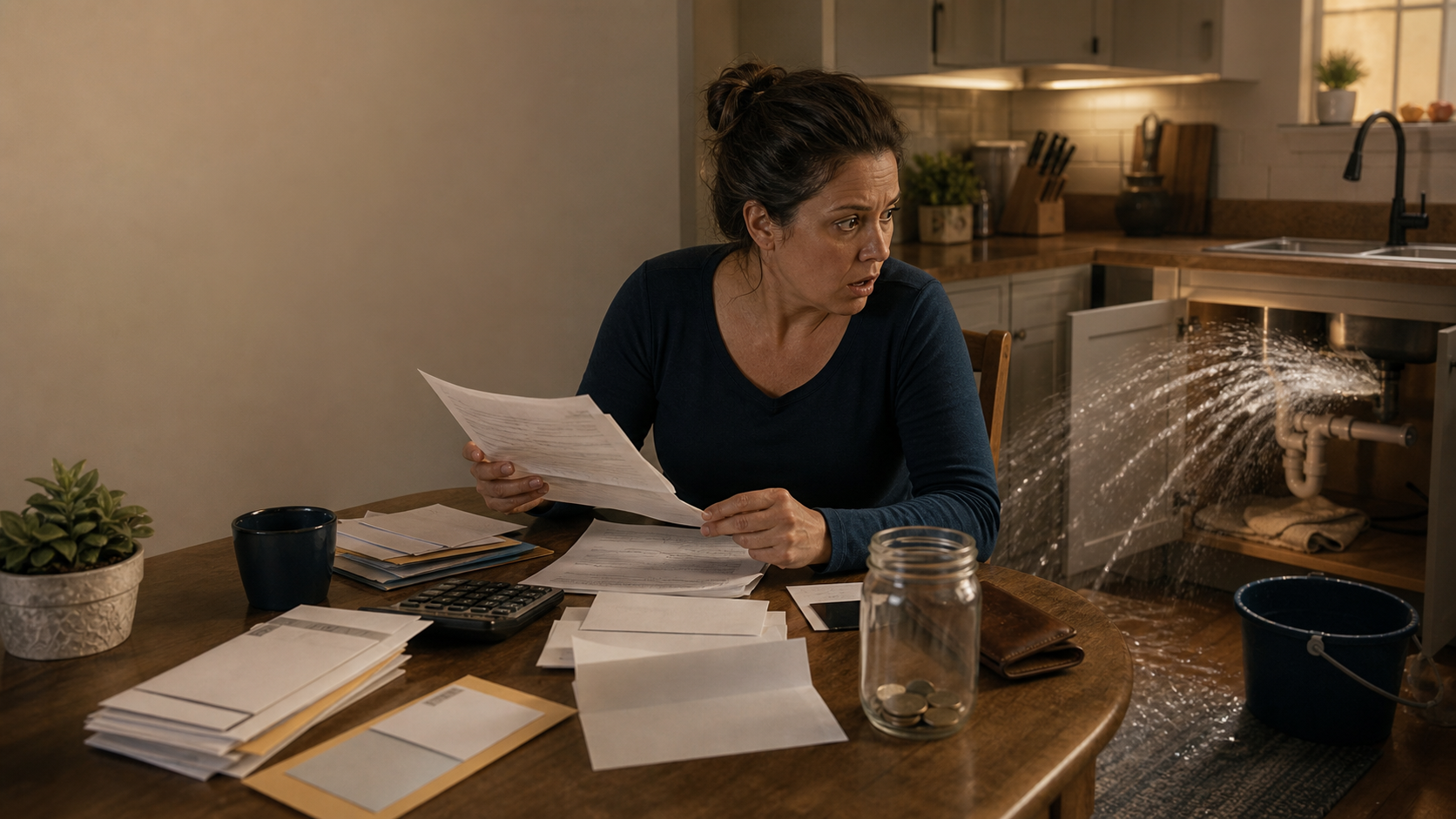
A pipe starts leaking? Your problem.
A tree needs to be trimmed because its branches are getting too close to the roof? Your problem.
The gutters need cleaning, an appliance dies, or the garage door stops working? You get the idea.
Not every home repair is an emergency, and not every homeowner will experience the same problems. That’s where regular maintenance comes in. Air filters need to be changed. Gutters need to be cleaned. Trees need to be trimmed before they become a threat to the house. HVAC systems need maintenance. Roofs eventually need attention. Appliances don’t last forever.
Even something as simple as re-keying the locks when you move in is worth considering. You may not realize how many previous owners, tenants, contractors, or others have had copies of those keys.
A home warranty can provide some peace of mind during the first year of homeownership. Depending on the plan, a home warranty may help cover the repair or replacement of certain major systems and appliances when they fail. Some sellers even offer a home warranty as part of the transaction.
But a home warranty isn’t a magic shield against every home repair. Coverage varies by contract; exclusions and limits apply, and you typically pay a service fee when you make a claim. It also doesn’t cover the regular maintenance that keeps a house in good condition.
It can be helpful. It just shouldn’t be mistaken for a substitute for having money available when you own a home.
Your Other Monthly Expenses Still Matter
This is where I think prospective home buyers need to take a much broader look at affordability.
You still have electricity, water, gas, internet, and a phone bill. You still have to put gas in the car and maintain the car. You still need groceries. You may have children who need daycare or have school expenses. You may have student loans, credit cards, personal loans, or other debts.
Those expenses don’t disappear because you bought a house.
Neither do the unexpected ones.
Your car can break down. Your child can need something you didn’t budget for. You can have an unexpected medical expense. Your income can change.
That’s why a home-buying budget needs to include more than the home’s cost. You need to look at the life you will continue to live once you own it.
A house that consumes so much of your income that there is nothing left for everything else may technically be affordable according to a lender’s guidelines, but that doesn’t necessarily make it a comfortable or sustainable choice.
Why You Need an Emergency Fund Before Buying a Home
I understand the temptation to use every dollar you have to get into the house.
You’ve saved for the down payment. You have closing costs. You have moving expenses. You may need furniture or other things for the new house. After all of that, you may look at whatever is left in your savings account and think, “Why wouldn’t I put that toward the house?”
Because cash has value too.
An emergency fund is not money you failed to use. It is money you intentionally kept available for the things you cannot predict.
And eventually, something will happen, because life happens.
The problem isn’t necessarily the emergency. The problem is what happens when you don’t have the cash to handle it.
That’s when a manageable expense can become debt. A credit card. Buy Now, Pay Later. A personal loan. And, in the worst situations, a payday loan or another expensive form of borrowing.
Suddenly, an expense you could have covered with savings becomes another monthly payment adding to the stress of daily life.
That’s not a good way to start homeownership.
When Renting Makes More Financial Sense
We don’t talk about this nearly enough.
Enormous pressure exists to become a homeowner. You hear that renting is throwing money away. You hear that you need to stop paying someone else’s mortgage. You hear that if you don’t buy now, you may never be able to afford a house.
I understand why people want to buy. Homeownership can be wonderful. You can build equity, have more control over your living space, and make changes without asking a landlord for permission.
But homeownership isn’t a race.
And renting isn’t a financial failure.
Renting has legitimate financial benefits, especially when you aren’t yet in a position to comfortably handle the responsibilities of owning a home. When you rent, the landlord generally handles major property repairs and maintenance. If the air conditioner dies, the roof leaks, or the plumbing needs major work, you usually aren’t the person responsible for coming up with thousands of dollars to replace it.
You still need insurance, of course. Renters insurance protects your personal belongings and provides liability coverage, while the landlord’s property insurance generally covers the building itself. Those are very different responsibilities from carrying homeowners insurance on a property you own.
Renting may simply mean paying for a place to live while you build the financial foundation you need to buy eventually.
There is nothing wrong with that.
How Much House Can You Really Afford?
This is where I think the question needs to change.
Instead of asking only, “How much can I qualify for?” ask yourself, “How much can I comfortably afford while still living my life?”
Those can be two very different numbers.
I spent decades working in mortgage underwriting, so I understand why qualifying for the loan matters. Rules and guidelines exist for a reason, and lenders have to determine whether a borrower meets those requirements.
But mortgage approval doesn’t guarantee homeownership will be financially comfortable.
The lender knows your income, your debts, your credit history, and the assets you are using to close. The lender doesn’t know that your car has been making a strange noise for six months. The lender doesn’t know your child will need braces. The lender doesn’t know that your department is about to be eliminated at your job.
Those are real-life financial considerations, and they matter.
Buying a Home You Can Afford to Keep
A mortgage approval tells you that you can qualify for the loan. It doesn’t tell you whether now is the right time to take on the responsibility of owning a home.
Sometimes the smartest financial decision isn’t finding a way to make the numbers work. It’s recognizing that they don’t work comfortably yet.
Waiting doesn’t mean you’ve failed. It means you’re giving yourself time to build savings, pay down debt, strengthen your finances, and put yourself in a better position to enjoy homeownership when the time is right.
Because the goal isn’t simply to get the keys.
The goal is to buy a home you can afford to keep.
