

Your Credit Score Is No Longer a Snapshot
What FICO 10T Could Mean for Future Mortgage Approvals
For more than 30 years, I made lending decisions using credit reports, credit scores, and underwriting guidelines that were designed to predict risk. During that time, the formulas behind credit scoring evolved, but the basic concept remained largely unchanged. A credit score represented a snapshot of a borrower’s financial life at a particular moment in time.
That snapshot is beginning to change.
A newer scoring model, FICO 10T, is gradually making its way into the mortgage industry and represents one of the more significant changes to credit evaluation I have seen in my career. Unlike traditional scoring models that focus primarily on where a borrower’s credit stands today, FICO 10T looks at how that credit has behaved over time.
That may sound like a small distinction, but it could change how risk is measured and how some borrowers are viewed during the mortgage approval process.
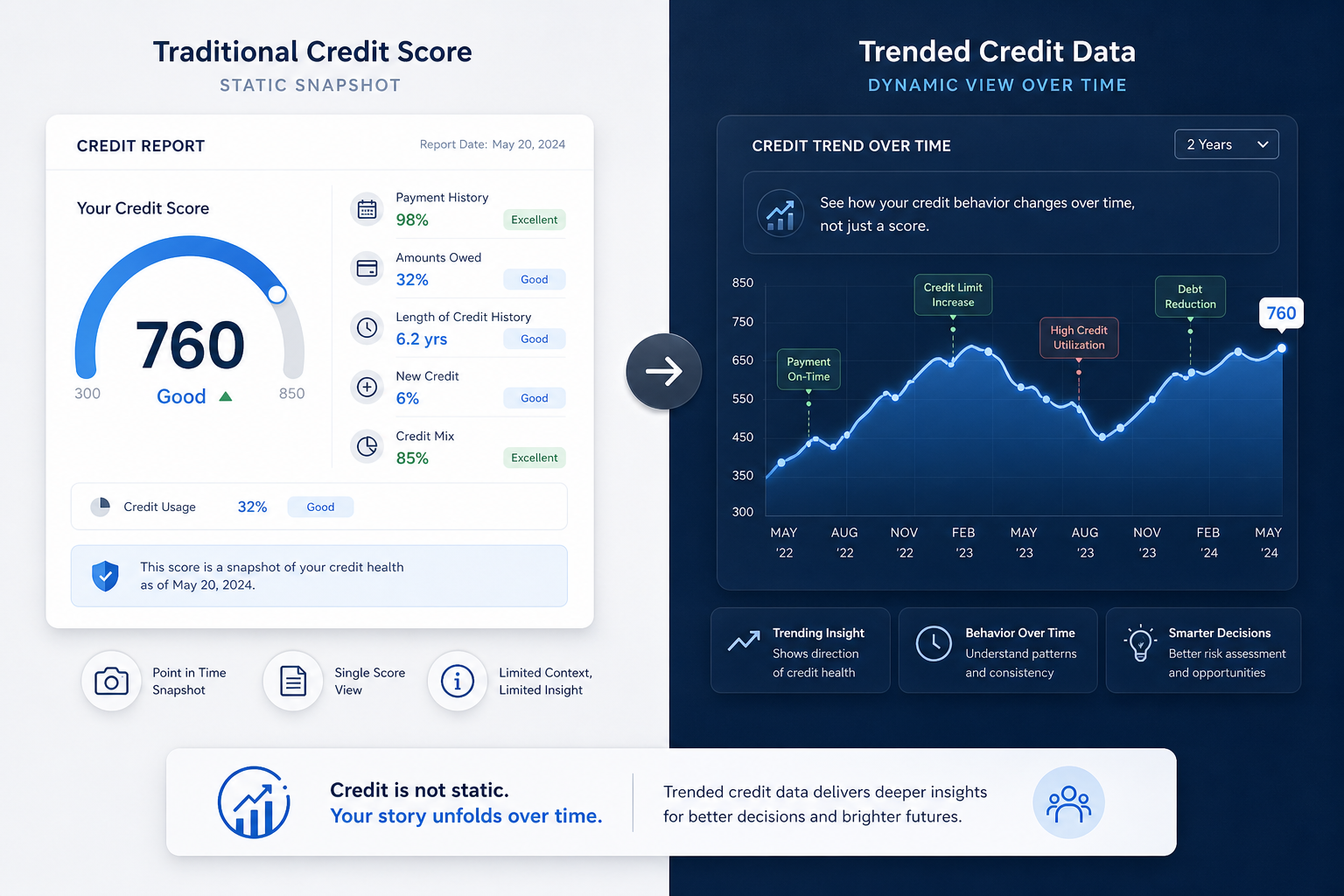
Looking Beyond a Single Moment in Time
The “T” in FICO 10T stands for trended data. In simple terms, that means the model looks at patterns in a borrower’s credit behavior over approximately two years rather than relying solely on a single snapshot.
Traditional credit scoring models evaluate the information on a credit report at the time the score is generated. They can tell a lender what a borrower’s balances look like today, whether payments have been made on time, and how much available credit is being used. Those factors remain important, but they do not always tell the entire story.
FICO 10T attempts to provide more context. Instead of looking only at where a borrower stands today, it examines how that borrower arrived there. Have credit card balances been steadily declining? Are balances gradually increasing each month? Is debt being managed consistently, or are there signs of growing financial pressure?
As an underwriter, I always found the story behind the numbers to be just as important as the numbers themselves. Two borrowers could have similar credit scores while presenting very different levels of risk. One might be steadily paying down debt and improving their financial position, while another might be moving in the opposite direction. Traditional scoring models did not always capture those differences. Trended data is designed to do exactly that.
Mortgage Lending Explained is a reader-supported publication. To receive new posts and support my work, consider becoming a free or paid subscriber.
Why Mortgage Lenders Are Paying Attention
Mortgage lending has always been focused on stability and predictability. When a lender approves a 30-year mortgage, they are making a long-term bet that the borrower will continue to manage their financial obligations successfully.
That is why underwriters evaluate income history, employment stability, available assets, debt obligations, and credit performance. The goal is not simply to determine whether a borrower qualifies today. The goal is to determine whether the patterns in that borrower’s financial life suggest continued success after closing.
FICO 10T aligns with that philosophy. By evaluating credit behavior over time, the model provides lenders with another tool to assess whether a borrower is moving toward greater financial stability or away from it.
For borrowers who consistently pay down debt and manage credit responsibly, that additional visibility may work in their favor. For others whose balances continue to climb month after month, the model may paint a different picture than older scoring systems.
Where FICO 10T Stands Today
One of the biggest misconceptions I am seeing is that FICO 10T has already replaced traditional mortgage credit scores. That is not the case.
The Federal Housing Finance Agency approved both FICO 10T and VantageScore 4.0 as part of its effort to modernize credit scoring within the mortgage industry. However, the transition is occurring in phases, and the mortgage industry is still working through the implementation process.
At the moment, approved lenders participating in the current phase of the transition may use either Classic FICO or VantageScore 4.0 for loans delivered to Fannie Mae and Freddie Mac. FICO 10T remains an approved model, but it is still moving through the final stages of industry preparation and implementation.
This is not unusual. Mortgage lending tends to move carefully whenever significant changes are introduced. New systems must be tested, validated, and integrated into existing processes before they become part of everyday lending decisions.
In other words, FICO 10T is coming, but it is not fully here yet.
Why the Industry Is Interested in FICO 10T
The primary reason lenders, investors, and regulators are paying attention to FICO 10T is simple. They believe it may do a better job of predicting risk.
Several studies have suggested that models incorporating trended credit data provide stronger insight into future loan performance than older scoring systems. The theory makes sense. A borrower who has steadily improved their financial position over the past two years may present a different level of risk than someone whose debt obligations have increased during the same period.
The mortgage industry has always sought better ways to distinguish between borrowers who appear similar on the surface. FICO 10T is designed to provide that additional level of insight.
It is also worth noting that the model can incorporate additional information, including rental payment history when available. That may help create a more complete picture for some consumers, particularly first-time homebuyers and borrowers with limited traditional credit histories.
What This Means for Future Homebuyers
For most consumers, the biggest takeaway is that credit behavior may become more important than ever.
Paying bills on time will still matter. Keeping debt levels manageable will still matter. Building a solid credit history will still matter.
What may change is how those habits are evaluated.
Instead of focusing primarily on where your credit stands on the day your mortgage application is submitted, future scoring models may place greater emphasis on the path that brought you there. Consistently reducing debt, maintaining stable credit usage, and demonstrating responsible financial management over time may become even more valuable than they are today.
For borrowers, that is not necessarily a bad thing. In many ways, it rewards the same habits that underwriters have always looked for when evaluating risk.
The Bottom Line
Credit scoring has always been an attempt to answer a simple question: how likely is a borrower to repay their obligations as agreed?
FICO 10T does not change that goal. What it changes is the amount of information used to answer the question.
By looking beyond a single snapshot and examining patterns over time, the model provides a more detailed view of how borrowers manage credit. Whether that ultimately leads to broader adoption remains to be seen, but the industry’s direction is becoming increasingly clear.
After spending more than three decades in mortgage underwriting, I can tell you that the most accurate lending decisions have never been based on a single number. They have always been based on understanding the story behind that number.
FICO 10T is simply another step in that evolution.
