

Caribbean Cruise Ports That Surprised Us From Amber Cove to St. Kitts
The Caribbean has a way of surprising you.
You think you know what you are going to get. Blue water. White sand. Cruise ports that begin to blur together after a while. After several stops on this sailing, I will admit that some days started to feel predictable.
And then, suddenly, one port shifts everything.
Exploring Amber Cove in Puerto Plata, Dominican Republic
Amber Cove, tucked along the northern coast of the Dominican Republic, was not high on my anticipation list. If you believe half the internet, it is simply a manufactured cruise stop owned by Carnival Cruise Line and nothing more. We arrived with modest expectations.
What we found was far more layered.
Yes, Carnival built the private dock and owns the surrounding 25 acres. But those 25 acres are thoughtfully developed with restaurants, open-air bars, shops, and a sprawling resort-style pool complex with slides, zip lines, cabanas, lounge chairs, and umbrellas. There is even a designated area where you can rent kayaks and other water equipment.
Amber Cove sits in Puerto Plata, within walking distance of La Playita Beach, a free public beach visible from the port. The historic downtown city center is about a 20-minute walk away. You can step beyond the gates easily.
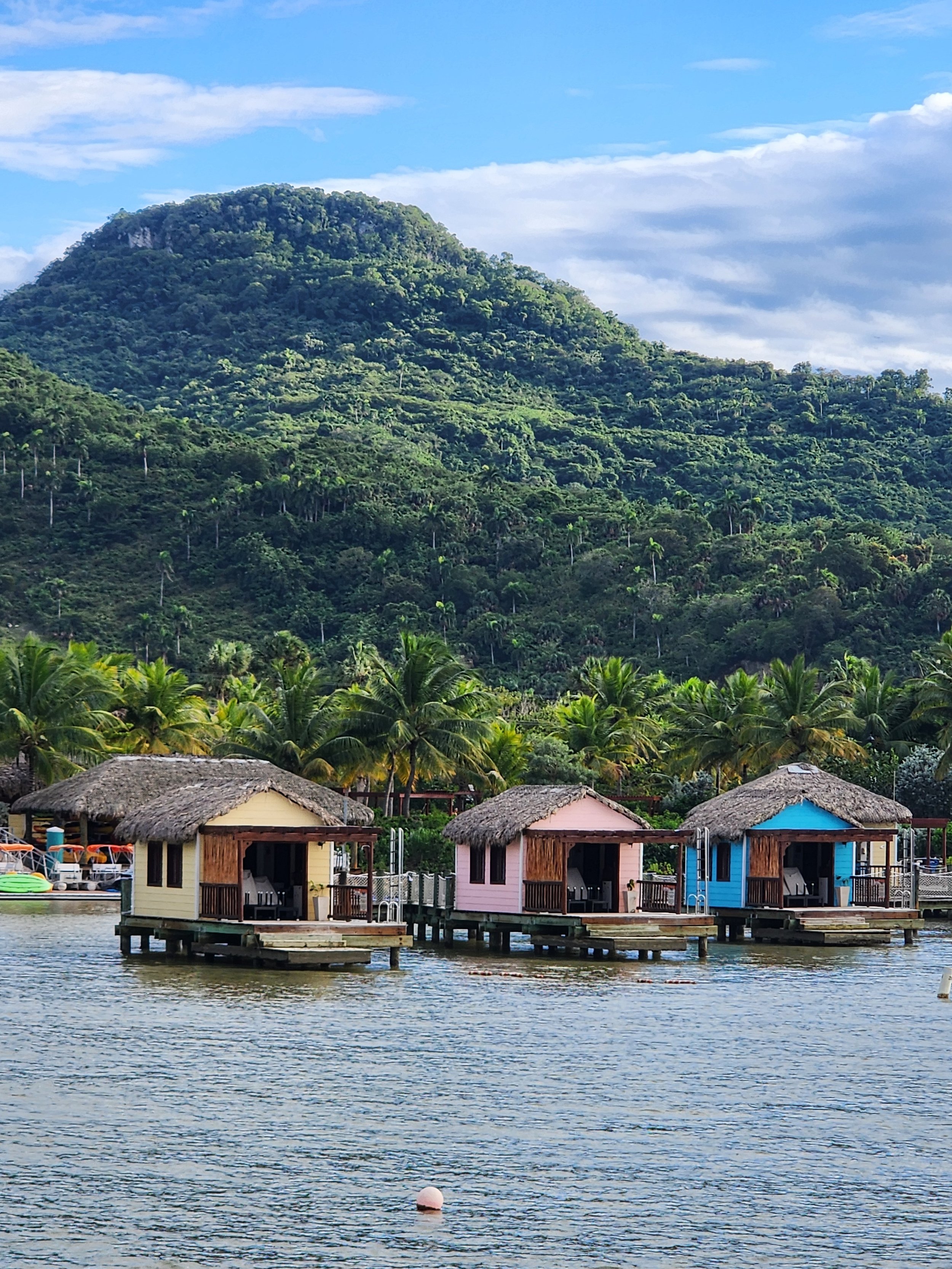
Amber Cover / Photo by Whaldo Digital Content
What surprised us most was that the pool complex, including the slides, lounge chairs, and umbrellas, is complimentary for cruise guests. The port feels organized and secure, with taxis, rental cars, and excursion meetups all operating seamlessly from one location.
Carnival’s investment also sparked broader infrastructure improvements in Puerto Plata. Roads were upgraded. Security increased. Local businesses moved into port spaces and revitalized storefronts nearby. When the port opened in 2015, it marked the beginning of renewed economic energy in the region.
On the day we visited, two ships were docked, yet the space never felt crowded. Empty lounge chairs waited by connected pools that somehow felt like separate retreats. For travelers who want a relaxed, budget-friendly day without planning an excursion, it works beautifully.
We usually prefer to venture beyond the port to understand the heart of a place. Amber Cove reminded us that even a cruise-built destination can carry a larger story. Still, our instinct is to explore.
Discovering St. Kitts on the Scenic Railway Tour
We carried that instinct with us when we arrived in St. Kitts.
If Amber Cove highlighted infrastructure and economic renewal, St. Kitts invited us into history and daily life. We arranged our own excursion on the St. Kitts Scenic Railway, a 30-mile journey that circles much of the island over three and a half hours, partly by train and partly by van.
The van portion provided context. Our driver explained the island’s economy, neighborhoods, and present-day rhythms. Then we boarded the double-decker train.
We chose the covered open-air top level. The lower level offered air conditioning, but we wanted the breeze and unobstructed views. From the top level, which swayed far more than felt entirely safe, we could hear birds calling from the trees and catch the scent of the surrounding foliage as we rolled past former plantations and stretches of coastline.
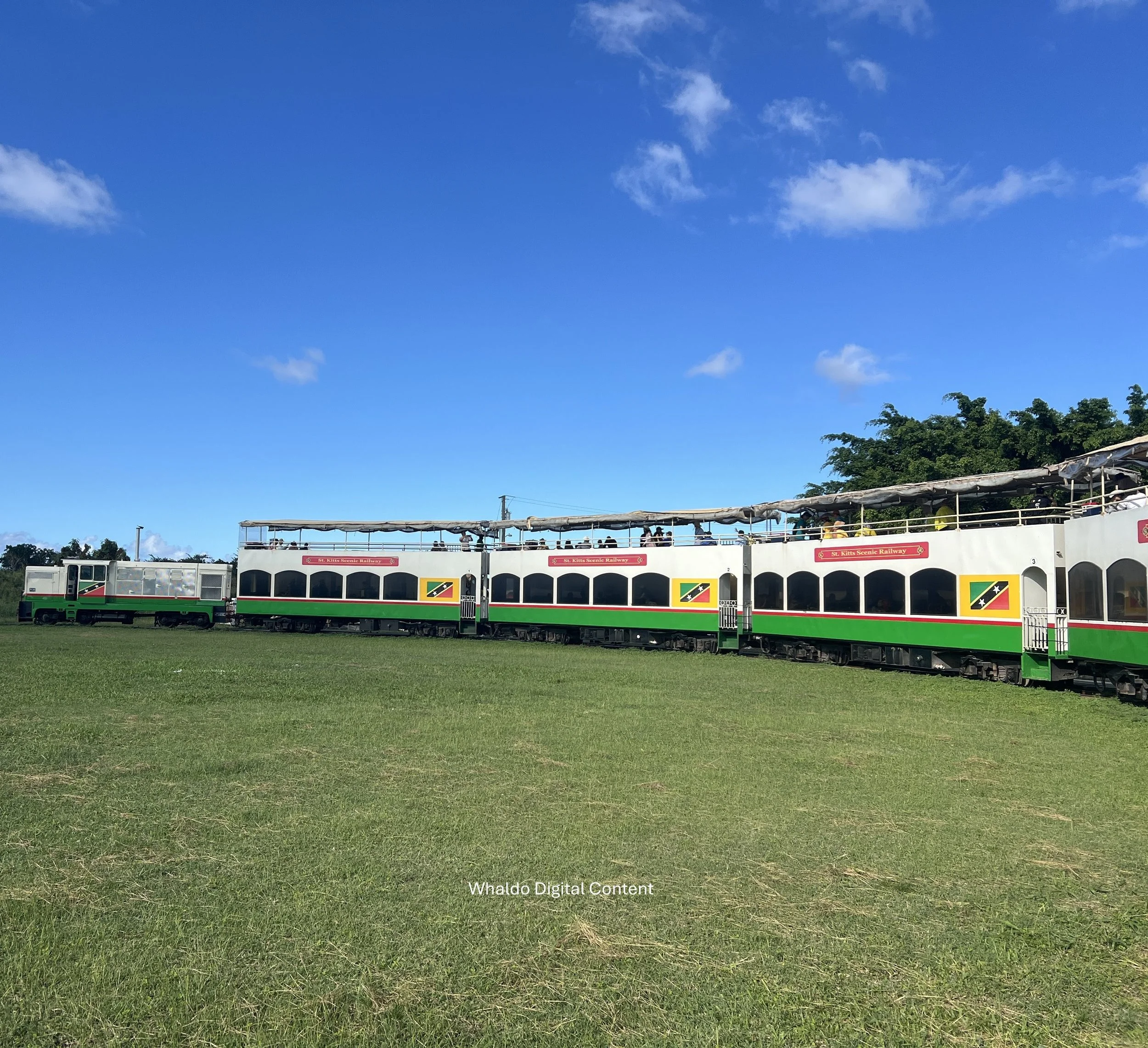
As our guide shared cultural stories and historical details, attendants moved through the car serving drinks and small snacks, including freshly made traditional Kittitian sugar cakes. They were cut into small squares, wrapped in simple plastic wrap, and handed to us one by one. Sweet, dense, and unmistakably tied to the island’s sugar cane history, they felt like a quiet nod to the past.
The original railway once transported sugar cane from plantations to ships when sugar dominated the island’s economy. After the industry closed in the mid-2000s, the route was transformed into a narrated cultural and historical experience.
As we passed through small villages, we glimpsed backyards, schoolyards, and everyday life. Children ran to wave. Locals lifted a hand in greeting from porches and roadside shops. It did not feel staged. It felt lived in.
We learned about native plants, local fruits, traditional recipes, and festivals that still shape community life. By the time we stepped off the train, St. Kitts felt less like a cruise stop and more like a place with history, resilience, and pride.
Why Every Caribbean Island Feels Different
What struck me most as we moved from port to port was how different each island felt, even though connected by the same sun, salt air, and sea.
Yes, there is the familiar Caribbean image. Turquoise water that almost looks edited. Palms bending toward the shoreline. Sun that kisses your shoulders whether you asked for it or not. That atmosphere lingers whether the sky is brilliant blue or briefly washed in tropical rain.
But beneath that beauty are distinct identities.
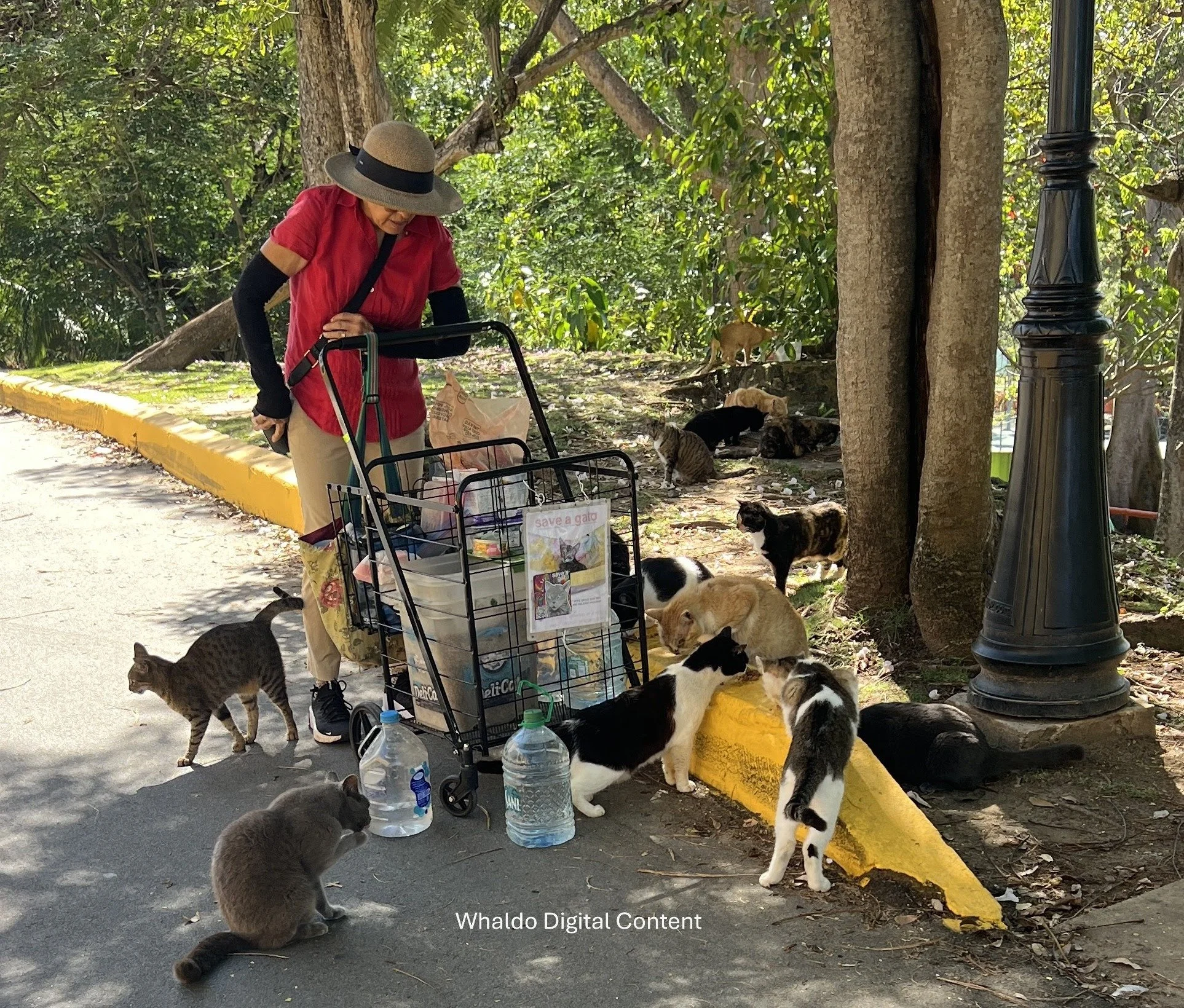
Amber Cove showed us how tourism can reshape a community and spark renewal beyond the dock. St. Kitts carried its history along steel rails once used for sugar cane, now repurposed to tell a different story. In Puerto Rico, we saw residents rally to protect their island’s feral cats. In Martinique, we stepped into the historic Bibliothèque Schoelcher, whose ornate details reminded us that Caribbean culture is layered and complex.
More Caribbean Cruise Stops Worth Exploring
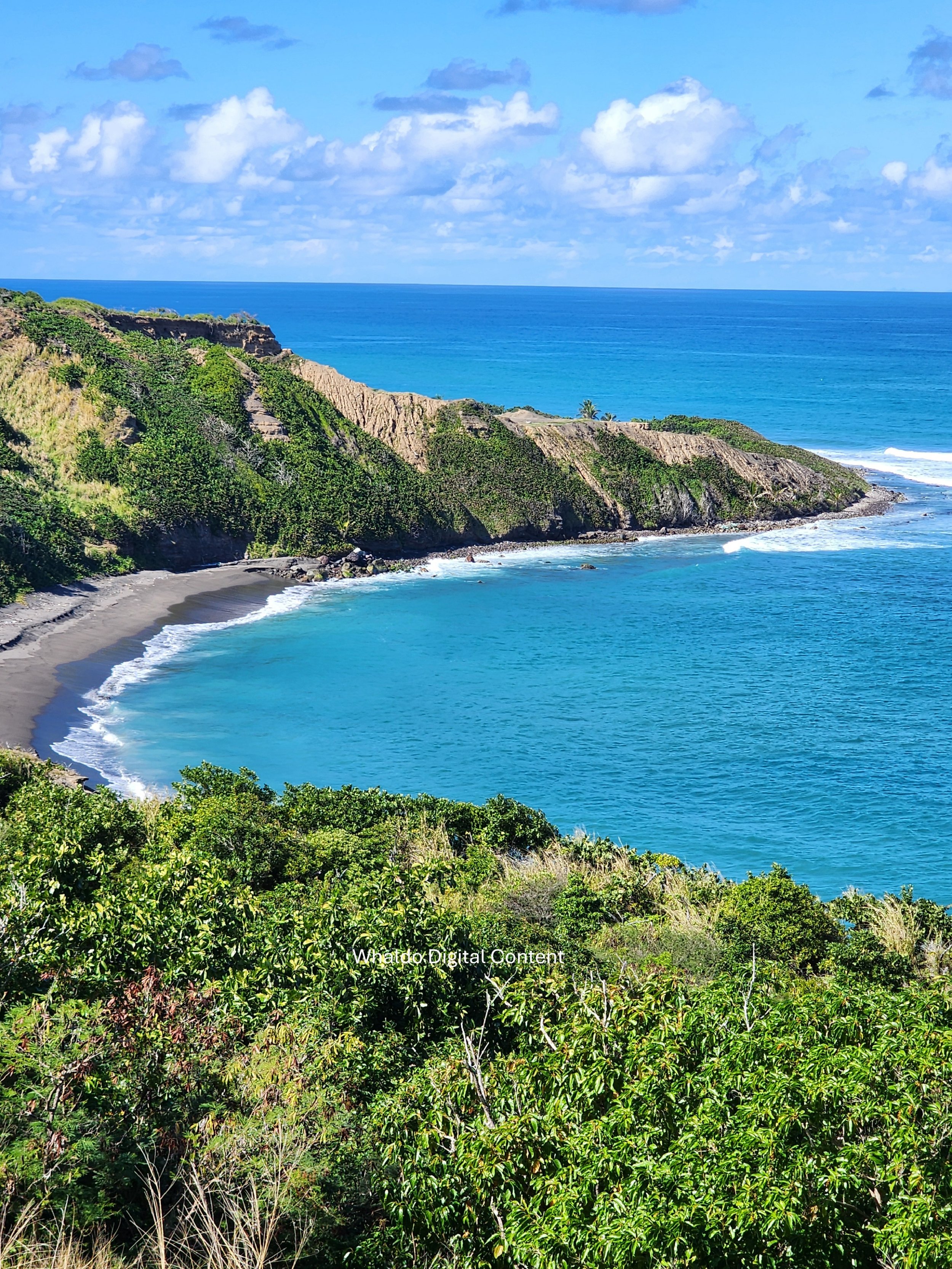
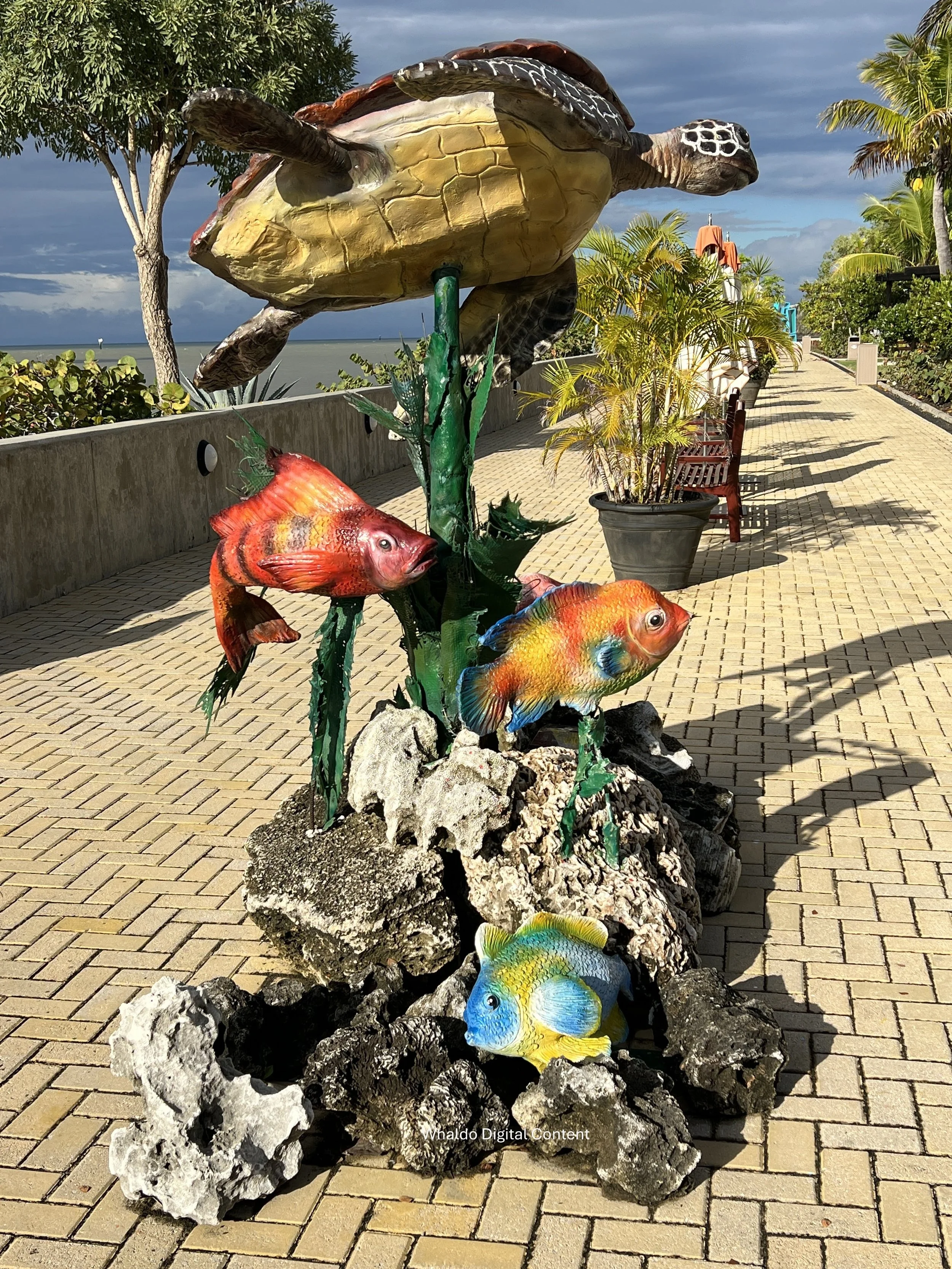
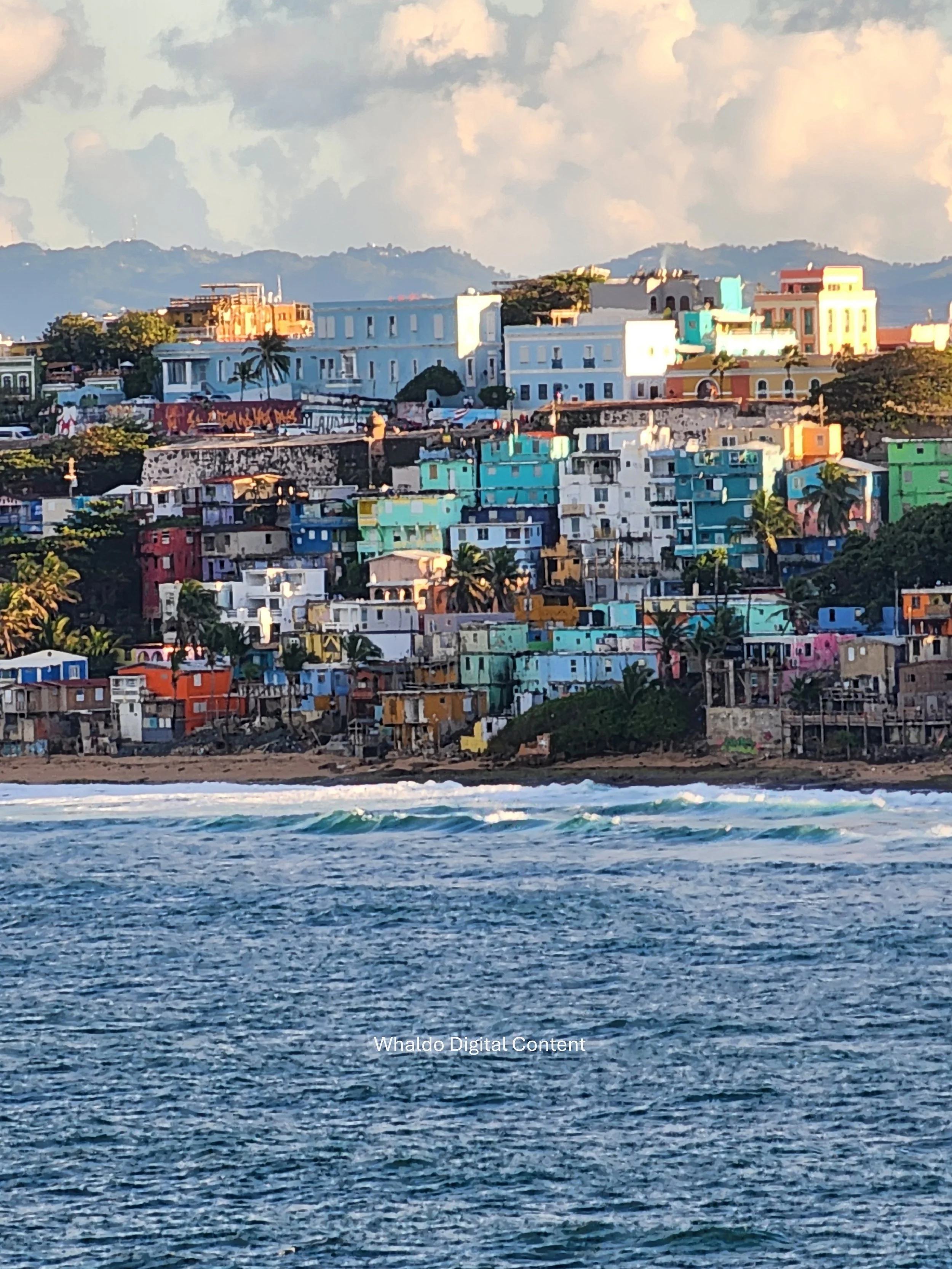
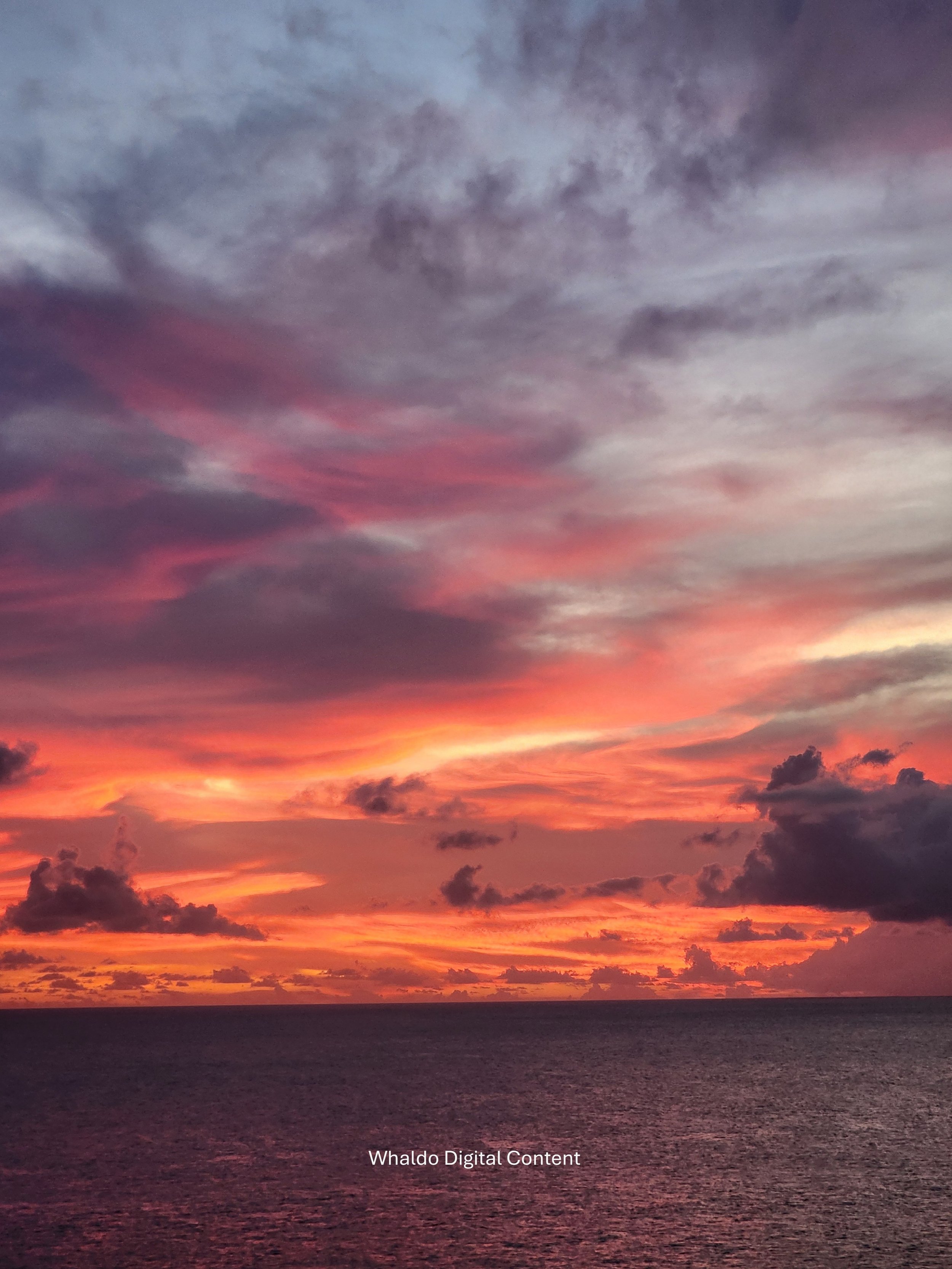
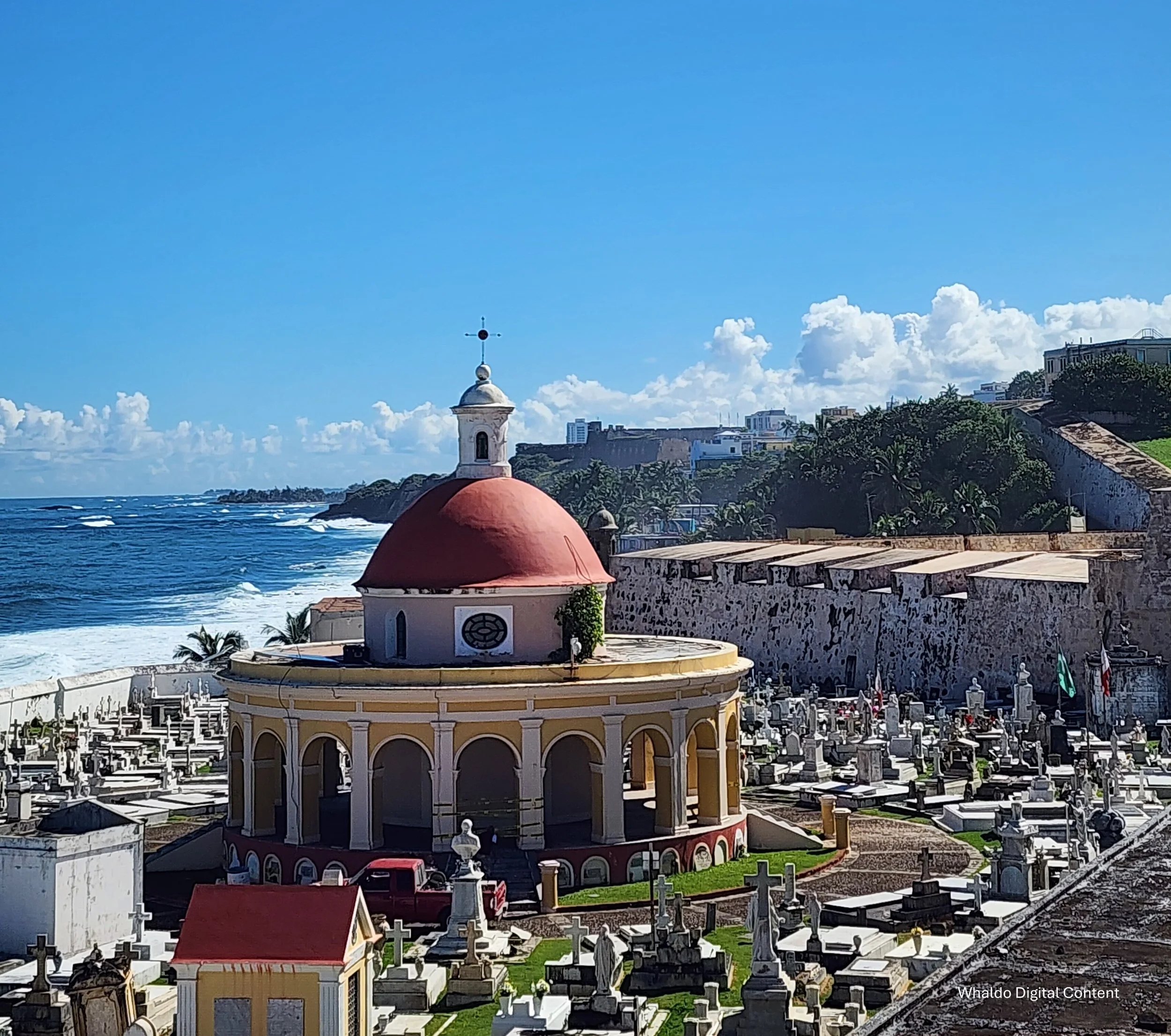
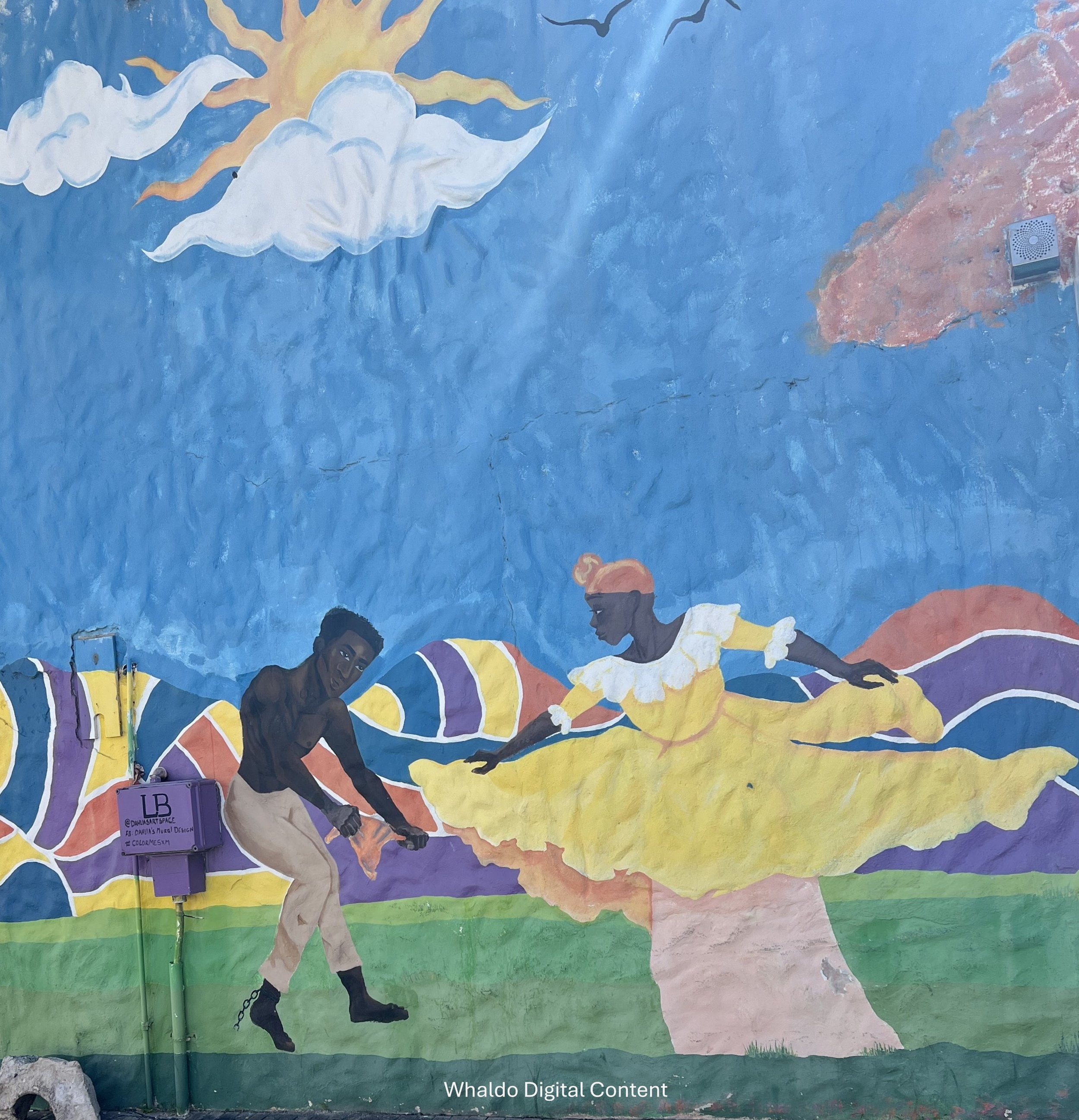
This feels like the right place to pause and share a few glimpses from the stops I have not written about. Coastlines at golden hour. Market stalls heavy with color. Quiet streets that do not show up in cruise brochures. Consider it a visual intermission, a reminder that there is always more than one story unfolding on these islands.
Because the Caribbean is not a single experience.
It is the hum of insects at dusk. It is the sway of a train car that feels just slightly too adventurous. It is sugar cakes wrapped in plastic and handed to you with a smile. It is schoolchildren waving as you pass. It is snorkeling over reefs, wandering through centuries-old forts, browsing local art, or simply sitting beneath a palm and watching the tide move in and out.
Some islands pulse with music and motion. Others invite you to slow down and listen. But everywhere we went, people greeted us with warmth and pride in their island home.
That is what makes visiting the Caribbean worth it.
Not just the beaches. Not just the weather.
It is the collection of small worlds, each with its own rhythm, ready to surprise you if you let it.
- J.S. Whaldo
