

A Caribbean Winter Escape With Stingrays, Rainforests, and Hidden Island Adventures
Escaping Winter for Caribbean Sunshine
When Mother Nature hands out rain, ice, and winter storms of the century across the United States in January, I choose frozen margaritas in the Caribbean.
In January, we visited 18 islands, soaking up Vitamin D and getting much-needed rest. It sounds like heaven, and in many ways it was. But to be honest, at some point, all the white sandy beaches and cobalt blue water start to look the same. Even with warm seas, colorful fish, and sea turtle sightings while snorkeling, it can begin to feel like the same activity on a different day. It probably doesn’t help that we live in San Diego and already enjoy beach days year-round.
Because of that, it felt extra special to leave an island knowing we had learned something or experienced something that stayed with us. That happened a few times on this trip, and I’m going to share a few of those moments with you over the next couple of articles.
Stingray City in Antigua, Where We Meet the Angels of the Sea
The first experience I want to tell you about happened on the island of Antigua. We had a stingray adventure out in the Caribbean Sea. Originally, we were scheduled to do this off the Cayman Islands, but the wind that day had other plans, and the excursion was canceled. We were thrilled to get another chance at this unique experience.
We loaded into a van that could hold us and 20 of our closest friends, all strangers, and drove through Antigua while our driver shared stories about the city and its people. After winding through one last neighborhood, we arrived at Stingray City.
Once there, we received a crash course on Southern Atlantic Stingrays and how we would interact with these gentle giants. Afterward, we donned life jackets and boarded small boats heading out to sea. We passed Laviscount Island and continued into open water. About fifteen minutes later, we spotted the buoys marking where the boat would stop and where we would step out barefoot onto a sandbar.
As soon as I stepped off the boat and found a sandbar I could stand on, chest-high for me, I immediately noticed large, dark shapes gliding through the water. Almost at the same moment I stood up, one of the gentle giant rays brushed past me with its wings, and I knew we were about to experience something special.
Meeting the Gentle Giants Up Close
We had to remember our lessons. Step gently. Don’t grab the rays. Don’t chase them. Let them come to you. Calm movements and quiet intention led to calm, non-threatening interactions with these wild animals.
We had already learned how to tell the males from the females. The males are much smaller, and I never noticed one. The females were impressive, reaching up to 6.5 feet and weighing up to 200 pounds. In contrast, the males rarely reach more than 2.5 feet.
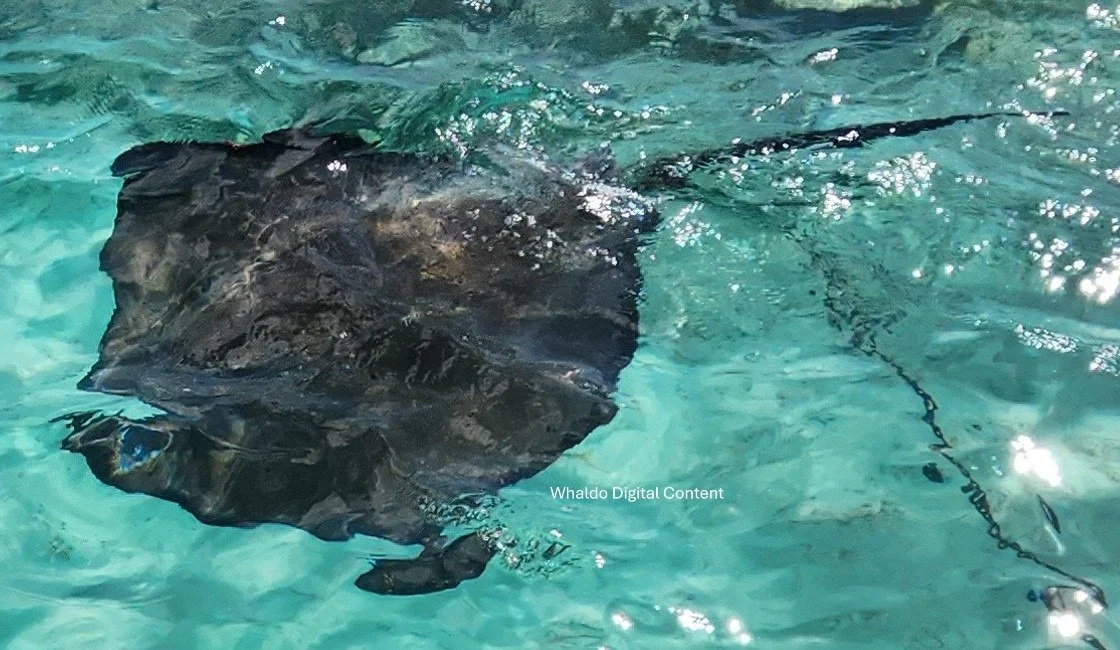
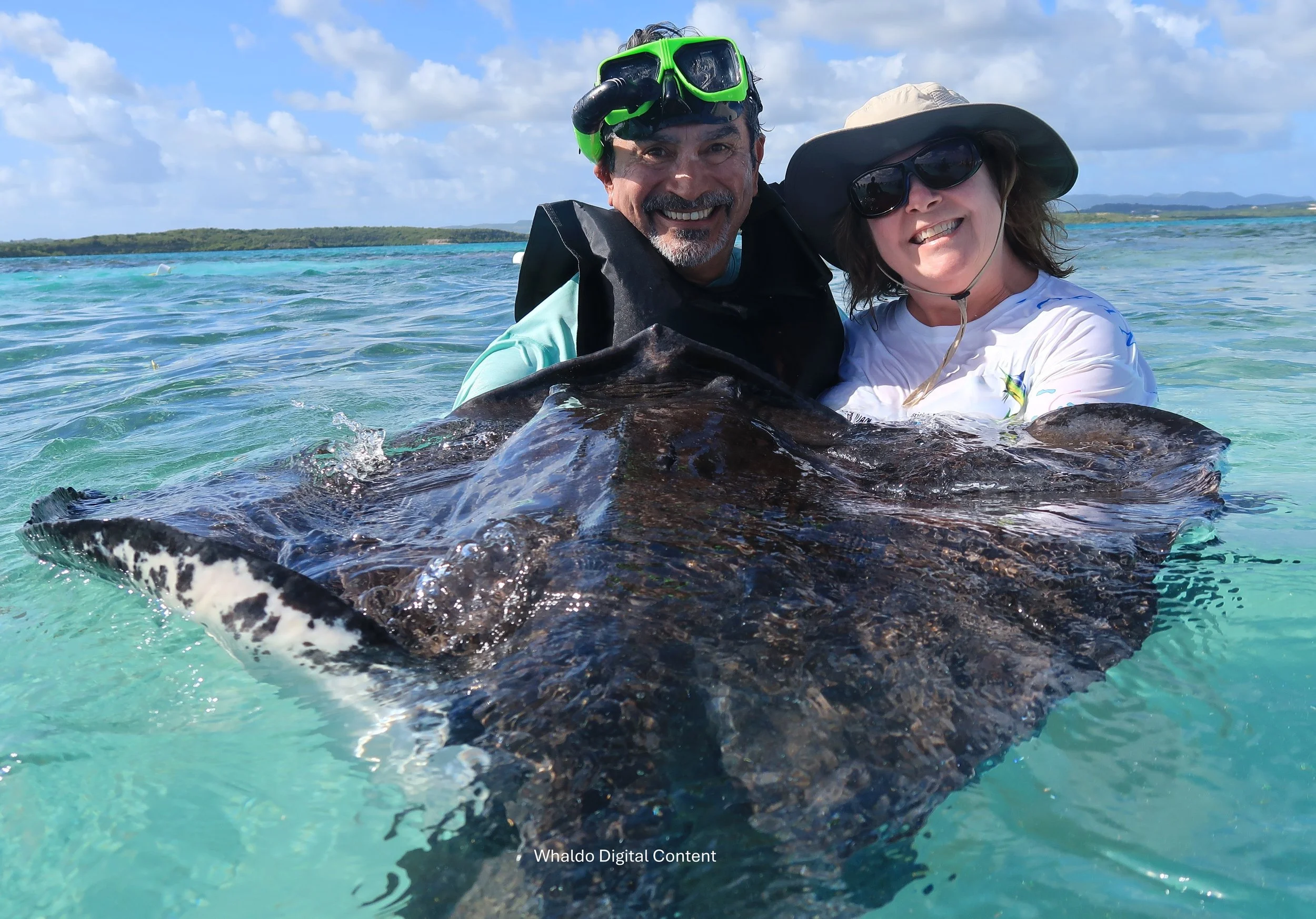
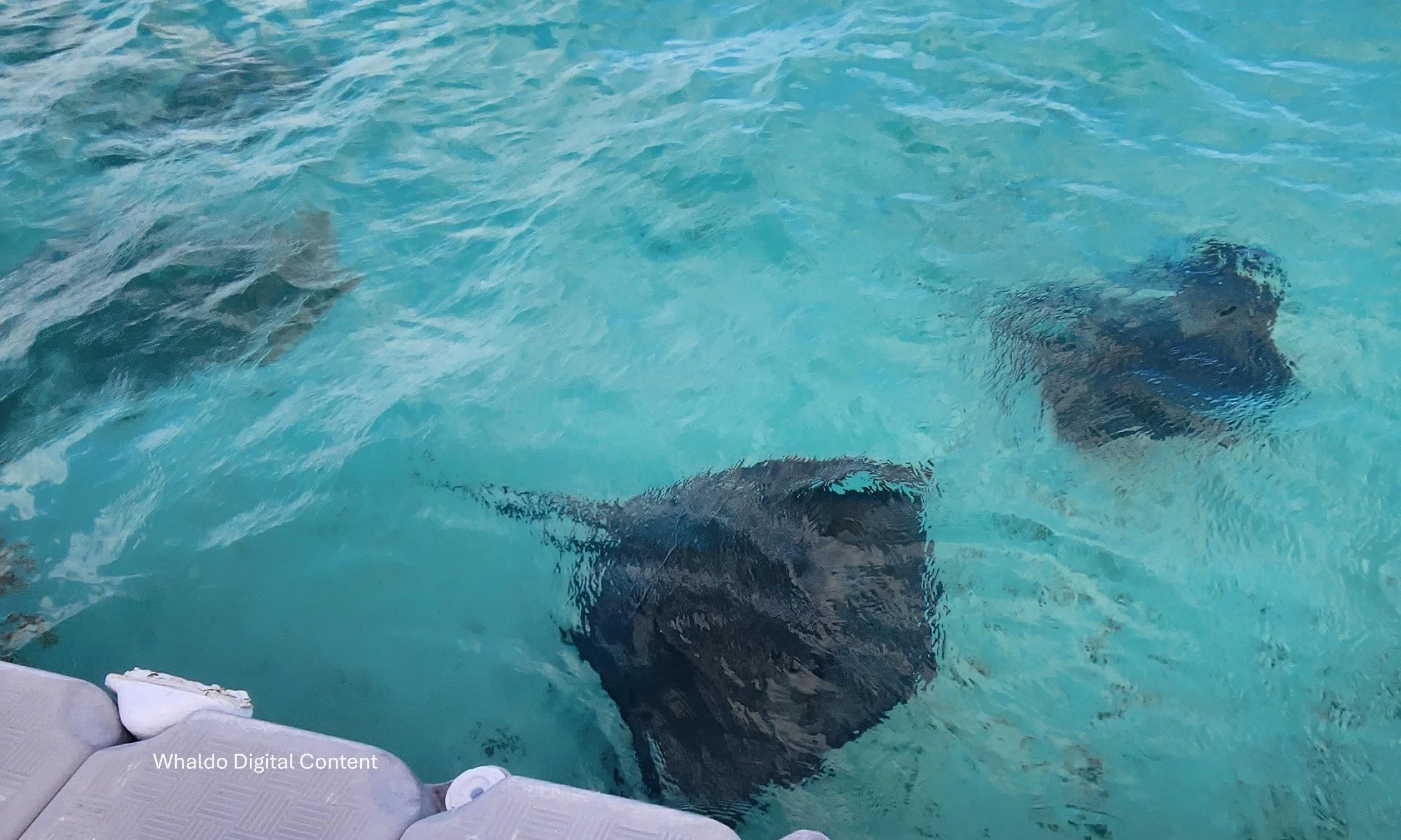
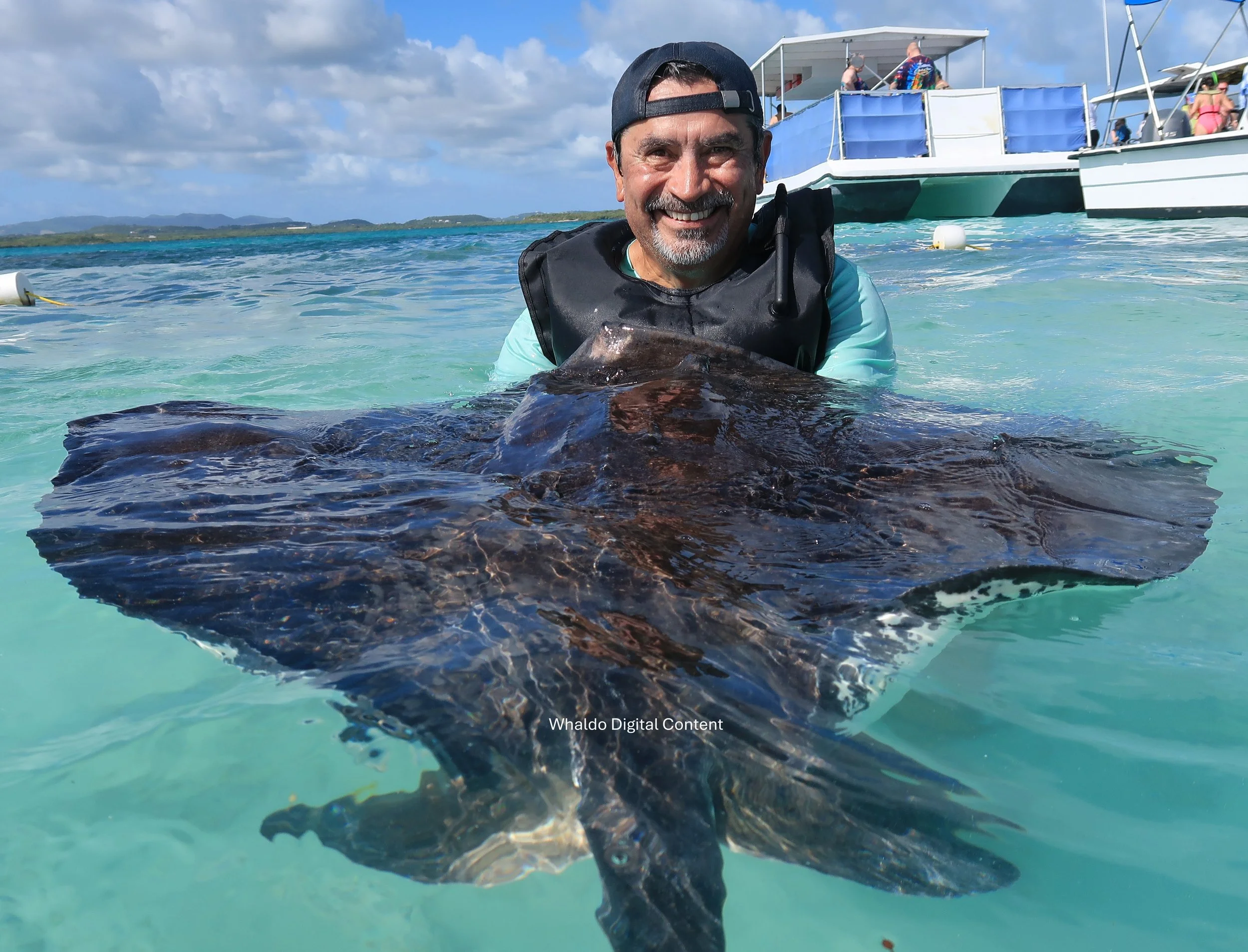
One of the wranglers, as the specialists in the water are called, had a large female approach him and calmly allow herself to be gently held by the guests. You don’t really hold a stingray. You don’t lift them, because that would frighten them, and they are far heavier than they appear. Instead, you hold your arms out, cradle her wings, and let her relax into you. When she’s ready, she simply moves on.
Both Mr. Whaldo and I were lucky enough to handle a large female who felt safe with us and rested easily on our arms. We held one together and also separately. The ray I held on my own seemed especially comfortable and lifted her beak onto my chest, as if to get a better look at me. She allowed me to gently boop her before calmly swimming back to her favorite wrangler.
We also had the opportunity to feed them squid, which they happily sucked from our hands. This was another carefully taught lesson, designed to keep us from earning any stingray hickies on our fingers, hands, or arms.
Learning Respect from the Gentle Giants
All of that was thrilling, but the true highlight was knowing these were wild Southern Atlantic Stingrays who came and went entirely on their own. Yes, they showed up for the free squid, but being in open water with them, surrounded by their quiet movement, felt magical.
As they brushed past, you could feel the strength in their wings, squishy and almost jelly-like, coated in their natural oils. They felt slightly slimy but incredibly powerful. Sometimes they allowed you to gently touch them as they passed. Other times they dipped deeper, just out of reach. Their tails felt barbed, not sharp, but clearly capable of doing damage if needed. I never touched one. That was a firm rule. But they didn’t mind if your fingers lightly brushed along them as they moved by.
The water was clear enough to watch everything unfold, with or without a snorkel mask. We spent about forty-five minutes in the water, and even now, thinking back on it leaves me feeling incredibly lucky. We weren’t observing them from a distance. We were respectfully sharing space with the wild Angels of the Sea.
While it’s exhilarating to have a close encounter with wild animals, especially when you don’t quite know what to expect, it’s a completely different kind of experience to arrive somewhere you’ve never heard of and leave feeling inspired by its history and culture.
Dominica: Rainforest Beauty and Kalinago Culture
That kind of meaningful experience came to us on the tiny island of Dominica. It is one of the lesser-known islands in the Caribbean and is essentially a rainforest. We began our day in Roseau, the capital, once again traveling with 20 of our closest friends, a driver, and a devoted personal guide who spoke throughout the day.
We learned about the island’s history and its compact 29-mile-by-16-mile geography, including nine volcanoes that are considered active. Dominica is mountainous and dramatic, receiving up to 250 inches of rain per month during the rainy season and only four to five inches per month during the dry season from February through April. It is lush, green, and unmistakably a rainforest.
The dense plant life and diverse bird population make the island a joy to explore. In the highlands, we visited a waterfall and spent time in a local community still inhabited by the island’s indigenous people, the Kalinago. We were welcomed warmly and invited to share a full vegetarian lunch.
The Kalinago grow their own food, and the simple meal we were served was memorable. We began with pumpkin soup, followed by three potato dishes made with different varieties, a fresh green salad with tomatoes and cucumbers, and finished with watermelon and pineapple. The richness of the soil was evident in every bite. When I complimented the soup, the chef kindly wrote down the “recipe” for me. There were no measurements, just ingredients, which felt exactly right. We now get to experiment and try to recreate that wonderful dish at home.
A Day Among Volcanoes, Waterfalls, and Local Life
Rain came and went throughout the day, something that seemed to dampen the spirits of some of our fellow travelers. Not ours. Mr. Whaldo and I happily hiked several trails, including the path to Jacko Waterfall, enjoying the warm rain on a balmy day. The landscape and misty air reminded us of the cloud forest in Costa Rica.
Because many people avoided the rain, we were able to hike down to the waterfall with ease, take photographs without crowds, and linger before heading back up the canyon. At the top, we sampled fresh fruit and rum juice. I chose the passionfruit juice without rum.
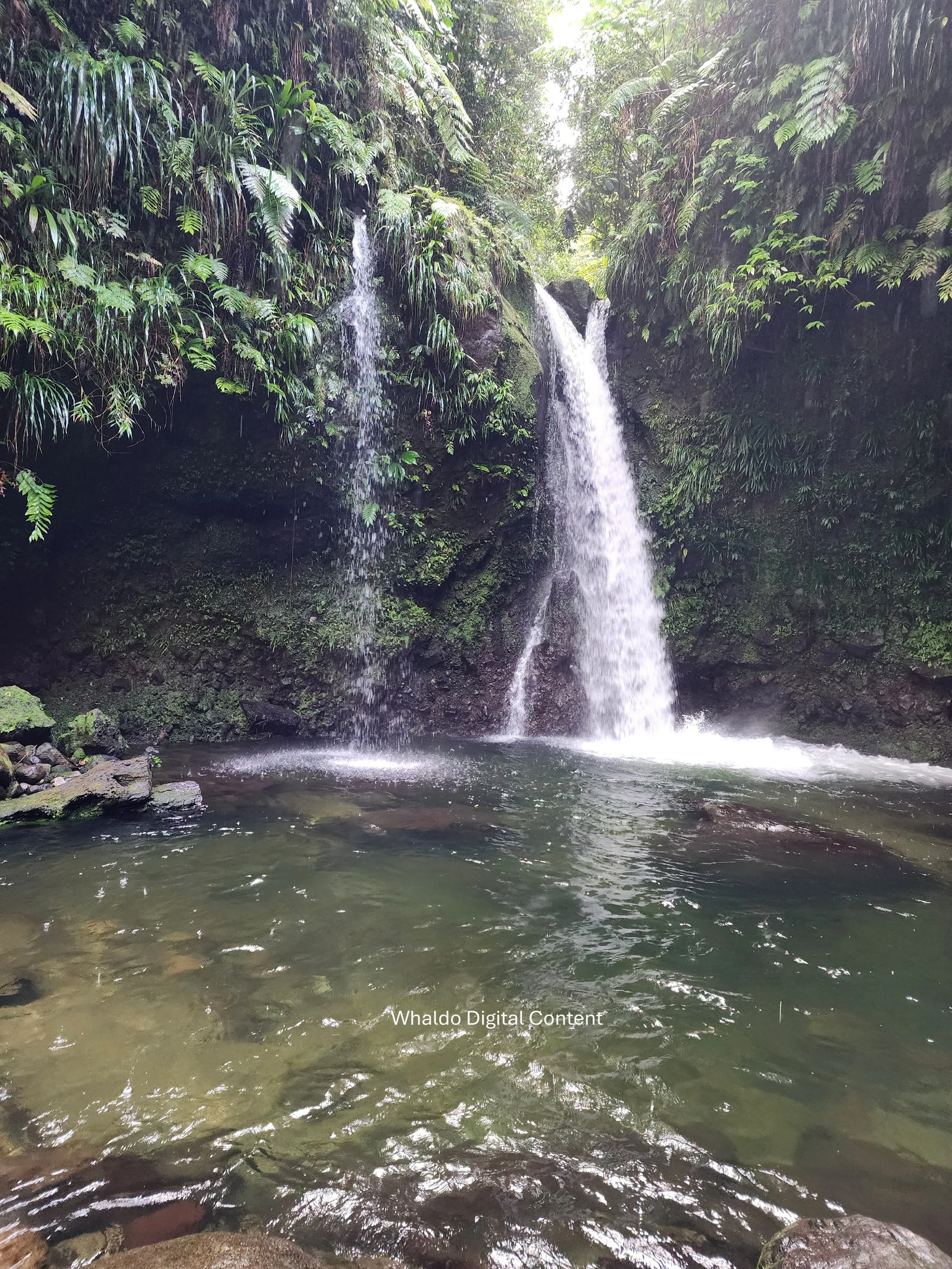
Jacko Falls / Photo by Whaldo Digital Content
What made this day truly special was learning about the people of Dominica. It is a poor island, and its residents have rebuilt their lives many times after hurricanes. Since gaining independence in 1978, eco-tourism has become an important and promising source of income. The people of Dominica are now finding more stable, well-paying work through tourism.
Everyone we met was genuinely kind and happy to welcome visitors. They were eager to answer questions and encouraged us to share our experience to help tourism continue to grow. It is clearly making a meaningful difference for their communities.
In recent years, China has become a partner in rebuilding schools, hospitals, and infrastructure, often improving and expanding them in the process. English is the primary language, with a touch of Creole from the island’s past under British and French rule. The people of Dominica speak very fast, which may not sound like English at first, but it is.
Reflections on Hidden Gems and Meaningful Travel
We left Dominica feeling that we had truly learned something about a culture we had previously known nothing about. We appreciated the openness and pride people showed in sharing their history and present-day realities. This is not an island of white-sand beaches and sugar cane. It has a distinct identity all its own.
It is a place we would return to without hesitation. If you ever have the chance, Mr. Whaldo and I highly recommend visiting Dominica.
Dreaming of Hidden Caribbean Wonders
You won’t be disappointed on any Caribbean island, but there’s something truly special about discovering a place that feels new, unexpected, and full of meaning. I can’t wait to share a few more memorable stops with you in upcoming articles.
In the meantime, I wish you dreams of a green island with balmy rain, colorful hummingbirds, and a cobalt blue sea. Picture a sandbar out in the middle of nowhere, where Angels of the Sea visit you briefly, full of curiosity and gentle wonder.
-J.S. Whaldo
